TL;DR
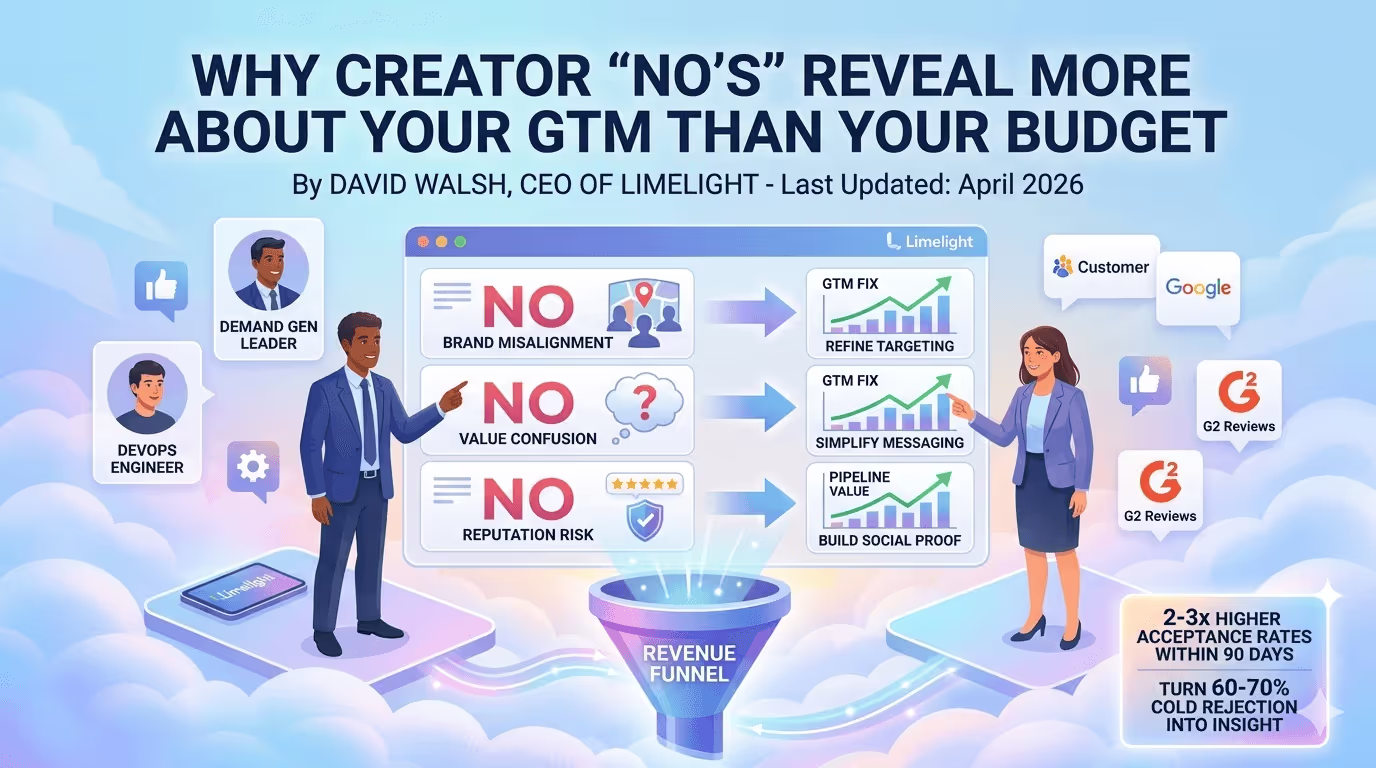
Creator rejections are not failures. They are diagnostic signals that expose weaknesses in your go-to-market positioning, brand perception, and outreach strategy. B2B brands typically face a 60-70% cold rejection rate from creators, but companies that systematically analyze these patterns see 2-3x higher acceptance rates within 90 days.
Why Do B2B Creators Reject Partnership Offers?
B2B creator rejections differ fundamentally from B2C influencer declines. When a LinkedIn thought leader or industry podcaster says no to your brand, they are making a calculated decision about professional reputation and audience trust.
According to industry data, brands experience a 60-70% rejection rate on cold creator outreach. In B2B, that number can climb higher because creators face greater reputational risk; a SaaS thought leader who promotes the wrong tool loses credibility with the exact decision-makers their personal brand serves.
The critical insight: rejection patterns are market research. Every "no" contains a signal about how the market perceives your brand, your category, and your value proposition.
The Five Types of Creator Rejections
Not all rejections are equal. Each type maps to a specific GTM weakness that can be addressed systematically.
Rejection Type
What the Creator Says
What It Actually Signals
GTM Fix
Brand Misalignment
"Not a fit for my audience"
Your ICP definition does not match the market
Refine targeting using audience data
Value Confusion
"I don't understand what you do"
Your positioning/messaging lacks clarity
Simplify value prop to one sentence
Compensation Mismatch
"Your budget doesn't work"
You are undervaluing creator economics
Benchmark rates against verified data
Timing/Capacity
"I'm booked right now"
Your outreach is reactive, not strategic
Build 90-day rolling pipelines
Reputation Risk
"I need to see more traction first"
Your brand lacks social proof
Invest in third-party validation
Turning Rejections into GTM Intelligence
1. Diagnose Targeting Failures
When a creator says "this isn't a fit for my audience," they are telling you that your understanding of your ICP does not match how professional communities self-organize. Limelight’s discovery agent, Ivy, analyzes audience composition at the professional identity level to ensure alignment before you ever hit send.
2. Pass the "Creator Clarity Test"
Value confusion is the silent killer of B2B partnerships. Personalized outreach with clear value propositions achieves 25-35% acceptance rates, compared to 5-10% for generic messages.
The Test: Can a creator explain your product to their audience in a single LinkedIn post without any supporting materials? If not, your messaging is too complex.
3. Bridge the Credibility Gap
"Reputation risk" is a signal that your brand has not accumulated enough third-party validation. Before approaching high-profile creators, ensure you have:
- G2/Capterra presence (at least 10 verified reviews).
- 3-5 customer case studies with specific metrics.
- Active LinkedIn presence from your leadership team.
How Limelight Automates Rejection Intelligence
Limelight’s AI agents transform rejection data into an automated intelligence system:
- Ivy (Discovery Agent): Pre-qualifies creators based on audience data to reduce misalignment.
- Cathy (Outreach Agent): Adapts messaging to creator context to eliminate value confusion.
- Allie (Relationship Agent): Tracks relationship progression over time, identifying when a "no" should become a "yes."
Companies using this structured analysis report 2-3x improvement in acceptance rates because each outreach cycle is informed by the intelligence of the last.
Frequently Asked Questions
What is a normal rejection rate for B2B creator outreach?
A 60-70% rejection rate is standard. Using data-driven platforms like Limelight typically reduces this to 40-50% by improving alignment before the first message.
Should you follow up after a creator rejects your offer?
Yes, but strategically. Ask for specific feedback and add them to a long-term nurture track. Limelight’s Allie agent automates this cadence to keep the relationship warm.
How many rejections do you need for actionable data?
A minimum of 30 data points provides statistical significance to identify dominant patterns in your GTM strategy.