Why Is Finding the Right Influencer Harder in B2B Than B2C?
In B2C, finding the right influencer is primarily an audience-matching exercise. In B2B, the creator must have professional credibility, their audience must include actual decision-makers, and their content must demonstrate a deep understanding of complex products.
The stakes are higher: while a poor B2C partnership wastes budget, a poor B2B partnership can actively damage credibility with target accounts.
Influencer vs. Creator: Understanding the Difference
While often used interchangeably, these terms describe different partnership models in a B2B context:
- B2B Influencers: Industry analysts or keynote speakers with large followings (100k+) who influence through authority and visibility.
- B2B Creators: Practitioners who build audiences by sharing professional expertise (e.g., a sales leader sharing outbound strategy).
Attribute
B2B Influencer
B2B Creator
Primary platform
LinkedIn, conferences
LinkedIn, Twitter/X, YouTube
Trust driver
Reputation, title
Demonstrated expertise
Conversion impact
Brand awareness
Demo requests, signups
Cost per partnership
$5,000–$50,000
$1,000–$10,000
The B2B Creator Selection Framework
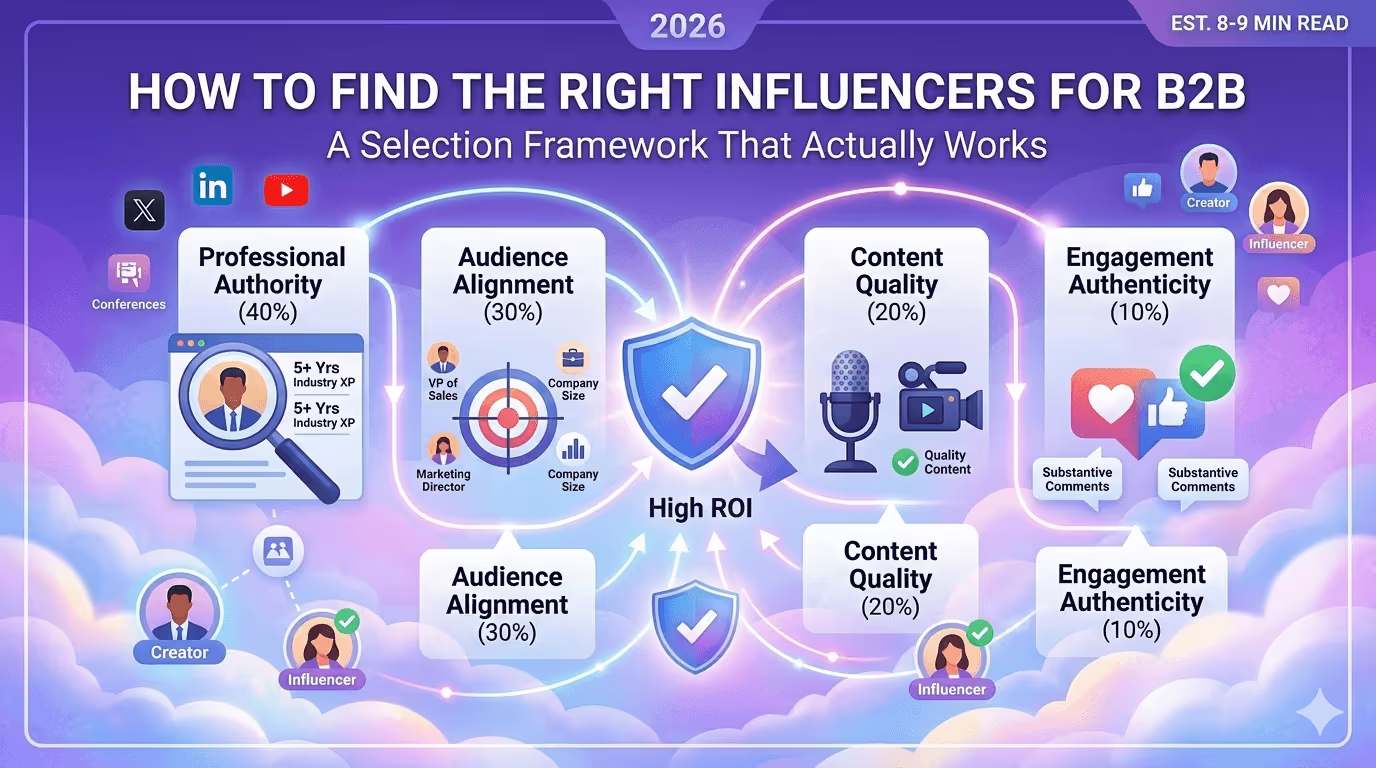
To evaluate candidates effectively, use these four weighted criteria:
1. Professional Authority (40% Weight)
This is the most critical factor. Evaluate a creator’s authority through their industry experience (years in the field), content depth (original insights vs. surface-level knowledge), and peer recognition.
2. Audience Alignment (30% Weight)
Measures overlap between the creator’s audience and your ICP.
- Job title distribution: Are they reaching your buyer persona?
- Company size: Do they reach enterprise or startup segments?
- Geography: Does their audience match your market availability?
Pro Tip: Limelight’s Allie agent automates this by scoring creators on alignment rather than requiring manual research.
3. Content Quality (20% Weight)
Evaluate production value, originality, and consistency. B2B buyers are discerning; low-quality content reflects poorly on your brand.
4. Engagement Authenticity (10% Weight)
Check for substantive comments and organic growth patterns. While fake engagement is a disqualifier, high authentic engagement is a baseline hygiene factor, not a primary differentiator.
The Decision Matrix
Use this scoring matrix to compare candidates systematically. Score each criterion (1–5), apply the weight, and sum for a total out of 5.0.
Criterion
Weight
Creator A
Creator B
Professional Authority
40%
5 (2.0)
3 (1.2)
Audience Alignment
30%
4 (1.2)
5 (1.5)
Content Quality
20%
3 (0.6)
4 (0.8)
Engagement Authenticity
10%
4 (0.4)
4 (0.4)
Weighted Total
100%
4.2
3.9
Minimum Thresholds: Disqualify any creator who scores below a 3/5 in Professional Authority or Audience Alignment, regardless of their total score.
Scaling Your Program: The Lookalike Strategy
Once you identify top-performing creators, use the Lookalike Strategy to find "more people like the ones already working".
- Analyze your top 3–5 performers.
- Identify common traits (background, frequency, platform mix).
- Search specifically for creators matching that profile.
Scaling Benchmarks
As your program grows, your team and platform needs will shift:
- Pilot (5–10 creators): 0.5 FTE; Spreadsheets.
- Growth (25–75 creators): 2–3 FTE; AI tools and full platforms.
- Scale (75–200+ creators): 4+ FTE; Enterprise automation.
Common Pitfalls to Avoid
- Optimizing for Reach: In B2B, 5,000 highly relevant followers outperform 500,000 followers of mixed relevance.
- Treating Partnerships Like Ad Buys: Creators need onboarding and product access. Invest 2–4 weeks in the relationship before production.
- Skipping Professional Vetting: Always verify work history and reference past brand partners.
Frequently Asked Questions
How much should we pay? Micro-creators (5k–25k followers) typically receive $500–$2,000 per piece, while top-tier (100k+) can command $7,500–$25,000+.
Can creators support ABM? Yes. By selecting creators whose audiences overlap with your target account lists, every post becomes a touchpoint for priority accounts—a strategy known as "creator-led ABM".